Front desk and appointments
Doctor schedules, booking links and WhatsApp reminders in one place, so the phone queue shrinks and slots are not wasted.
- Appointments
- Doctor schedules
- Booking links
- Reminders
- Waitlist
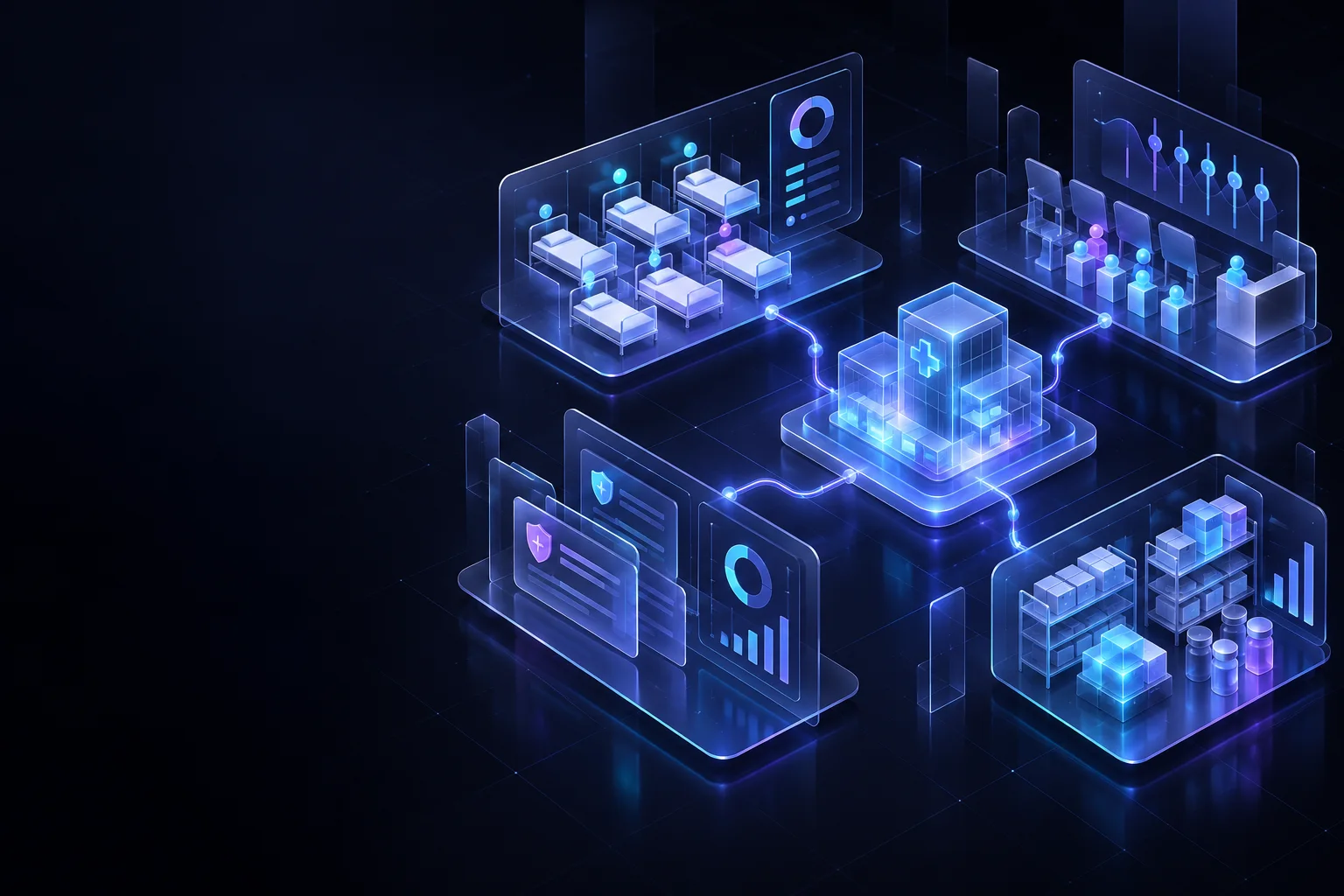
A non-clinical hospital management view built from ONE3 apps: appointments, admissions, beds, billing, TPA claims, pharmacy stock, biomedical assets and staff. Planned for Waves 4 and 5.
ONE3 does not replace your clinical systems. It runs the administration around them: the front desk, admissions, bed visibility, OPD and IPD billing, TPA and insurance claims, pharmacy and store stock, biomedical maintenance, staff rosters and payroll, and patient communication.
Each of these areas is an existing ONE3 app or module, configured through the Clinic & Healthcare, Diagnostics Lab and Hospital Administration editions. Patient consent sits at the centre, data is hosted in India by default, and every Digital Employee here is non-clinical and works under a named person.
Switch views. Each one is built from ONE3 modules, with example data.
Each area is composed from existing ONE3 apps and modules, with the AI help it is designed to give.
Doctor schedules, booking links and WhatsApp reminders in one place, so the phone queue shrinks and slots are not wasted.
One administrative patient profile with contact preferences and recorded consent for each purpose.
Consultation and procedure bills with UPI links and receipts, posted straight to the books.
Admission requests, deposit estimates and paperwork tracked from enquiry to bed allocation.
A live view of beds by ward and status, with housekeeping turnaround tracked as work.
Theatre and procedure room bookings checked against equipment, staff and maintenance windows.
Discharge bills, TPA pre-authorisation paperwork and claim follow-up with documents attached.
Stock by batch and expiry across the pharmacy and stores, with reorders under approval limits.
Home collections, sample barcodes, turnaround time and report delivery tracked as one flow.
Every device with its service schedule, warranty, AMC and downtime history.
Shift rosters, attendance, leave and payroll for a large, shift-based workforce.
Questions about timings, bills and reports answered on WhatsApp and phone, with handoff to staff.
Non-clinical steps only. Scroll through the stages.
The enquiry arrives by WhatsApp, phone or website and is logged against the patient profile.
The front desk agent offers open slots, books one and sends a reminder the day before.
Front desk staff confirm details and record consent for each purpose, such as reminders and records sharing.
The OPD bill is issued with a UPI link and receipt, and posted to the books.
The admissions desk prepares the deposit estimate and paperwork. The clinical decision stays with the doctor.
The bed board shows clean, available beds by ward, and the desk allocates one.
The OT booking is checked against rooms, equipment and staff rosters for clashes.
The billing assistant checks the bill and claim pack for gaps. Billing staff approve and submit.
A follow-up reminder and a feedback request go out on WhatsApp, and any complaint becomes a ticket.
Non-clinical agents that draft, check and remind. People approve and decide.
Receptionists juggle ringing phones, walk-ins and paper diaries.
The front desk agent books, reschedules and reminds on WhatsApp and calls, and hands anything clinical to staff.
A person decides: Front desk staff handle exceptions and every clinical question.
Claims bounce back for missing documents, and follow-up happens when someone remembers.
The billing assistant checks bills and claim packs for gaps and tracks pending claims.
A person decides: Billing staff approve every bill and claim before submission.
Expired medicines are found during a stock count.
Reorder proposals and expiry warnings come from batch-level stock and consumption.
A person decides: The pharmacist approves purchases and disposal.
Devices miss their service dates and break down during use.
The maintenance planner schedules preventive work and raises work orders before dates lapse.
A person decides: Biomedical engineers decide on repairs and replacements.
Overtime and night-shift errors surface after salaries are paid.
The payroll checker compares each run with attendance and the last run, and flags anomalies.
A person decides: HR resolves flags and approves the run.
Requests for records or erasure arrive by email with no clock.
The privacy assistant logs the request, starts the clock and drafts the response.
A person decides: The privacy owner approves every response and any erasure.
Appointments, billing, pharmacy stock and patient communication, with consent at the centre.
Bookings, home collection, barcode tracking and report delivery for labs.
Admissions, beds, billing, TPA claims, staff and assets for hospital administration.
Prescriptions, expiry alerts and refill reminders, with the pharmacist always deciding.
Batch and expiry tracking, retailer credit and schemes for pharma distributors.
Consent, notice, data-principal rights and breach reporting for patient data. A pointer to verify with counsel.
Any linking of patient records with ABHA IDs follows ABDM standards and consent flows. A pointer to verify with counsel.
Registration, display of rates and record-keeping duties vary by state. A pointer to verify with counsel.
Drugs and Cosmetics rules on sale records, batch details and scheduled drugs. A pointer to verify with counsel.
IRDAI guidance on cashless claims, pre-authorisation and settlement timelines. A pointer to verify with counsel.
Segregation, records and reporting under the Bio-Medical Waste Management Rules. A pointer to verify with counsel.
No. ONE3 runs the business and administrative side of a hospital or clinic. Clinical records, orders and results stay in your clinical systems.
No. Every healthcare Digital Employee is non-clinical. Anything clinical is handed to your staff.
The Clinic & Healthcare and Diagnostics Lab editions are planned for Wave 4, and Hospital Administration for Wave 5. Nothing is available today.
In India by default. Tenant data does not train shared models, and erasure requests reach every place the data is held.
That is the plan, through governed connectors and the integration hub. Specific connectors will be confirmed with design partners.
Yes. Each edition starts with signed design partners, a domain expert and counsel sign-off. Apply through the contact page.
We are looking for hospitals, clinics and labs to run the admin workflows in shadow mode first.